

Future technologies & enabling plasma Processes
RESEARCH
Building plasma science and engineering (PSE) research capacity in AL, including Low-Temperature Plasma (LTP) and space plasma science, in academic institutions and partners
INTERNSHIPS
Supporting undergraduate and graduate education, training, and research opportunities, and encouraging and enabling access to plasma physics
K-12 OUTREACH
Creating new educational and outreach resources and plans for K-12 students and teachers, promoting plasma science and engineering (PSE) and general STEM
Ftpp initiative
The NSF EPSCoR Future Technologies and Enabling Plasma Processes (FTPP) is a 10-member university and industry consortium. The project leverages Alabama’s laboratory and space plasma science expertise to contribute scientific knowledge, technologies, and workforce to Alabama’s aerospace, manufacturing, advanced materials, medical, bioscience, and agricultural sectors.


→ This image presents the collaboration among the partners.
events
-
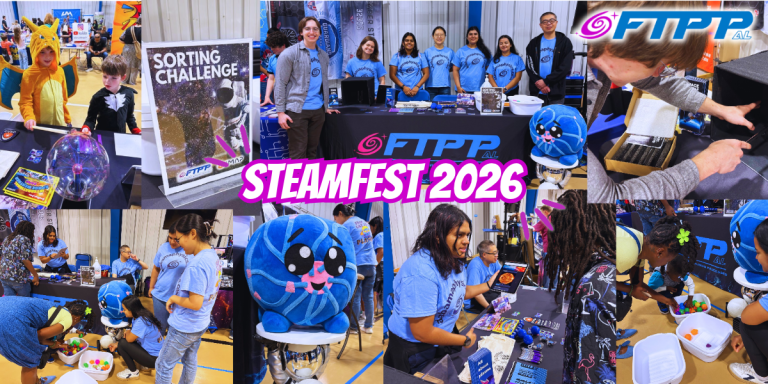
FTPP Brings Space Science to STEAMFest 2026
FTPP was excited to participate in STEAMFest 2026! Held on October 24 at the Boys & Girls Club of North…
-
UPDATE: Connecting Plasma Science and Quantum Science
Conference Update: IMPORTANT UPDATE Dear colleagues, I want to express my thanks to you for your interest in the 2026…
-
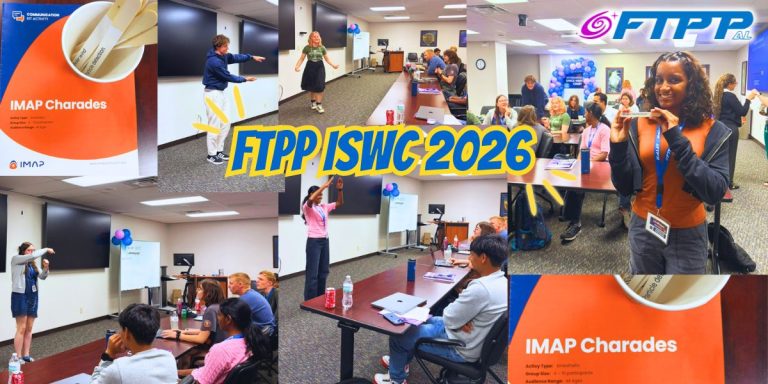
ISWC Learns about Space Weather Through IMAP Charades!
As part of the FTPP International Space Weather Camp (ISWC), students from the United States and Germany came together for…



What is plasma?
Plasma is a state of matter consisting of a collection of ionized particles, electrically neutral atoms, and molecules. It makes up more than 90% of the observable universe and underpins several high-tech manufacturing industries. Familiar forms of plasma include the sun, stars, lightning, neon signs, television screen displays, welder’s torches, and rocket exhaust.

NSF EPSCoR FTPP
Building research, education, economic, and workforce capacity through discoveries in space & lab plasma physics and creating innovative technologies.

FTPP had an amazing time at STEAMfest 2026! 🚀
On Saturday, our team joined the...

You’re invited to the 2027 FTPP Alabama International Plasma Physics Conference! (AIAPC) 🚀
Join us...

Monika Karki is a Space Science student at The University of Alabama in Huntsville who...

FTPP is excited to spotlight a new article featuring FTPP partners Dr. Eva Kostadinova and...

🌌✨ Out-of-this-world news for FTPP!
FTPP PI Dr. Gary Zank has received the 2026 COSPAR...

Congratulations to Dr. Gabe Xu on receiving a new award from NSF! 🎉
In collaboration...
NSF EPSCor ftpp
About the cooperative agreement
FTPP involves a partnership comprising nine universities and a research corporation in Alabama and is funded through Cooperative Agreement OIA-2148653 by the National Science Foundation (NSF) through a Research Infrastructure Improvement (RII) Track-1 five-year grant within the Established Program to Stimulate Competitive Research (EPSCoR)*. The FTPP project is overseen by the Alabama EPSCoR Steering Committee.
* Disclaimer: The opinions, findings, and conclusions, or recommendations expressed are those of the author(s) and do not necessarily reflect the views of the National Science Foundation.
FTPP on News 19
WHNT News 19 featured our work: UAH produces tangible results in plasma science and engineering.

vision
Alabama becomes a world-renowned hub for PSE (Plasma Science Engineering) by developing transformative future technologies (such as advanced materials, food safety and sterilization, space weather prediction) and building foundational plasma science research and industry with a skilled workforce.
Mission
FTPP will build research, education, economic, and workforce capacity in pursuit of making foundational discoveries in space and laboratory plasma physics and create future societally transformative technologies in the State of AL, utilizing Alabama’s statewide expertise in plasma science and technology.